hypermedia (noun): a term first used in 1965 by Ted Nelson to imagine digital media that is interconnected in complex and non-linear ways.
Editor's Note
At the turn of the millennium, the early Internet held the promise of expression without limits, crossing international borders and weaving past gatekeepers of legacy media publications. In the spirit of anarchy, freedom, and global connection, millions of chat rooms, forums, personal websites, and blogs flourished.
Over the last 15 years, a handful of companies have created centralized platforms of power and control — YouTube, Gmail, Facebook, Instagram, TikTok, Twitter/X — that have redefined the terms of creative expression to fit their advertising and data-mining objectives. These platforms keep us distracted and dependent, weakening our bonds with our friends and neighbours. In 2026, artists and writers cannot count on reaching audiences, or even creating, without depending on these platforms.
By changing the framework of how published work can be accessed and shared on the Web, we can influence the kinds of writing and artwork that seem possible in the first place. It will help us unlearn habits built while creating for the benefit of algorithms, and will help us start creating for ourselves again.
We are strategically using big tech’s tools in unexpected ways to create intentional interplay between real-world relationships and online experiences — building what scholar Fred Moten might call fugitive spaces outside the surveillance economy.
This collection of stories subverts the tools of big tech while pushing the boundaries of storytelling on the web:
Birthday Quest by Aaron El Sabrout is a narrative game that explores how ad targeting algorithms reinforce oppressive systems of societal control, particularly the gender binary.
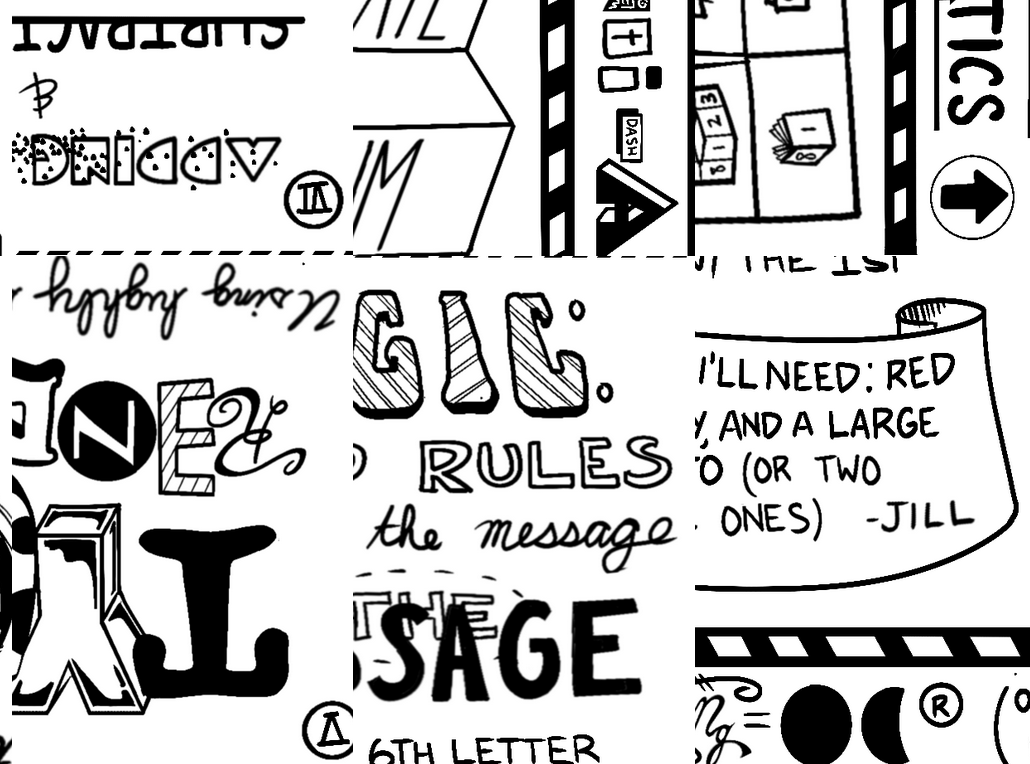
For Human Eyes Only by Ryan Cassidy is an exercise in digital obfuscation, publishing a zine that can only be understood by humans, not machines.
What's In The Domes? by Sadie Ingle is a spiritual meditation on the cult of neoliberal economics and the Canada Trust Centre in downtown Kitchener, using location tracking and the lunar cycle to force the reader to engage beyond the screen.
Each of these stories is an experience tailored for the open Web. They don't fit the content structure of corporate social media. They are multidisciplinary, inviting readers to bring their literary curiosity, but also to poke and prod the source code. The corporate Internet has taken away our ability to break things in order to put them back together and understand how they work. This collection is the opposite: a set of bespoke mini-websites that start with a blank <html> tag and build a world of possibilities from there.
This collection represents a publishing model that is not easily monetized, scraped, or scaled up. It takes time to create without a template. In a software landscape that tilts ever more towards one-click autocomplete solutions, New Hypermedia means slowing down and moving with intention to create something novel.
— Sam Nabi, Textile Web Editor and editor of the New Hypermedia collection